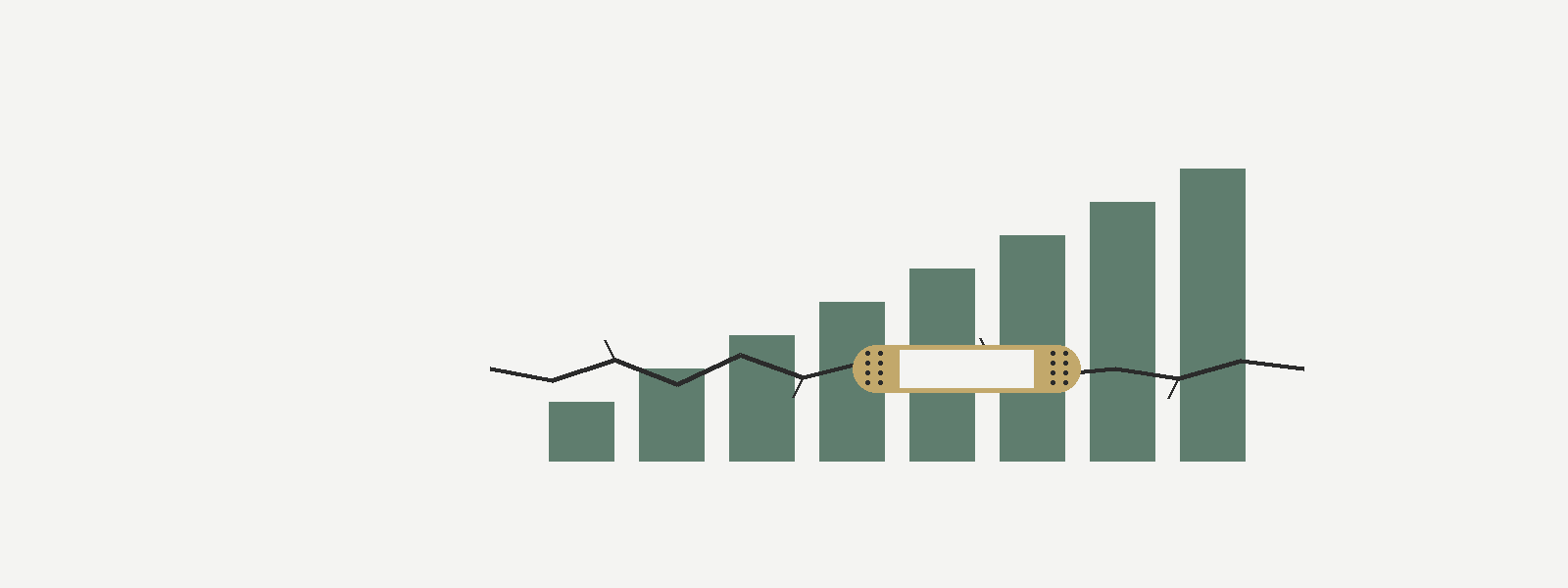
Your Business Doesn't Need More Aspirin
We've Seen This Pattern Before — In Medicine
Healthcare has been going through its own version of this realization. For a long time, the model was reactive: something goes wrong, you treat it, you move on. Increasingly, the field has shifted toward a more holistic view — recognizing that sleep, nutrition, stress, movement, and mental health aren't separate boxes. They interact. Poor sleep affects stress. Stress affects decision-making and physical health. One system under strain puts pressure on the others.
Treating each symptom as its own isolated event misses what's actually going on underneath.
Businesses have the same architecture, and we treat them the old way.
The Business Version of Symptom-Chasing
"We need more leads" becomes a marketing budget increase — when the real issue might be that the sales process depends entirely on the owner, and nothing closes without them in the room.
"We can't find good people" becomes a recruiting push — when the real issue might be that decision rights are so unclear that even good hires default back to the founder for permission.
"Cash is always tight" becomes a push to sell more — when the real issue might be that invoices aren't followed up consistently, because no one owns that process.
"We automated it" becomes the quiet fix everyone points to — and yet the same topic is back on the agenda next meeting, just faster and with a dashboard attached.
None of these fixes are wrong, exactly. They're just aimed at the wrong layer. And because the underlying cause is untouched, the symptom comes back — often wearing a different name, which is why it feels like a "new" problem instead of the same one resurfacing.
This cycle isn't free. Every round of fixing the symptom costs money — a new hire, a new tool, a new campaign — and when the problem resurfaces anyway, it costs something harder to get back: trust. Leadership starts to quietly expect that nothing really gets fixed, just delayed. That expectation is exhausting to work inside of, and it's usually mistaken for burnout when it's actually frustration at solving the same thing twice.
The Part Most Businesses Miss: These Issues Aren't Siloed
The instinct is to route each symptom to its department. Revenue issues go to sales. Delivery issues go to operations. Cash issues go to finance. People issues go to HR.
But look back at those examples above — none of them actually stayed inside their own department. The leads problem was a sales-dependency problem. The hiring problem was a decision-rights problem. The cash problem was an ownership problem with no name on it. The automation "fix" didn't touch any of it — it just gave the same root problem a faster engine. In practice, the four are rarely independent — they're the same underlying strain, surfacing wherever the pressure finds an exit. Route each one to its department for a local fix, and you haven't solved anything; you've just given the headache a new name to come back under.
The businesses that get ahead of this aren't the ones with the most resources. They're the ones who've learned to ask a different question before reaching for a fix: is this the actual problem, or is this where the actual problem happens to be showing up?
Four Places to Look
When a business is carrying more complexity than its current systems can absorb, the strain tends to show up across four areas:
Revenue Engine — not just "are we getting leads," but whether revenue is predictable, repeatable, and doesn't collapse the moment one person is unavailable.
Operations & Delivery — whether work moves consistently, or depends on tribal knowledge and one or two people holding it all together.
Cash & Coffers — whether financial pressure is a revenue problem, or a visibility, collections, or timing problem wearing revenue's clothes.
People & Culture — whether the team has real decision rights, or whether everything of consequence still quietly routes back to the owner.
Look at all four together, and a pattern usually emerges that no single department could have shown you on its own.
The Real Value Isn't Finding More Problems
Most leaders don't need help finding problems. They can list them without prompting — usually more of them than they have time to fix.
What's harder is knowing which one is actually driving the others, and which ones are just downstream noise. That's the real shift: from reactive symptom management to understanding the system well enough to know where to intervene.
Not every headache needs a new medication. Sometimes it needs someone to ask why it keeps coming back in the first place.
“Have you sat in a leadership meeting and watched the same topic come back around — again — even though you were sure you’d solved it last quarter?
The staffing issue that keeps resurfacing under a new name. The cash crunch that eases for a month, then returns. The “communication problem” that’s been on every agenda for a year, dressed up differently each time.
That’s the headache in your business that never quite goes away. You treat it, it fades, and it comes back — usually at the worst possible moment.
If this sounds familiar, you’re not doing anything wrong. You’re doing what most leaders do: treating the symptom that hurts the most, right now. The problem is that a symptom treated in isolation almost always returns, because the thing actually causing it was never addressed.”
“Not every headache needs a new medication.”